6,000,000 users
Where we are and where we are going.
In May, we crossed 3M users on Resend.
Today, we crossed 6,000,000.
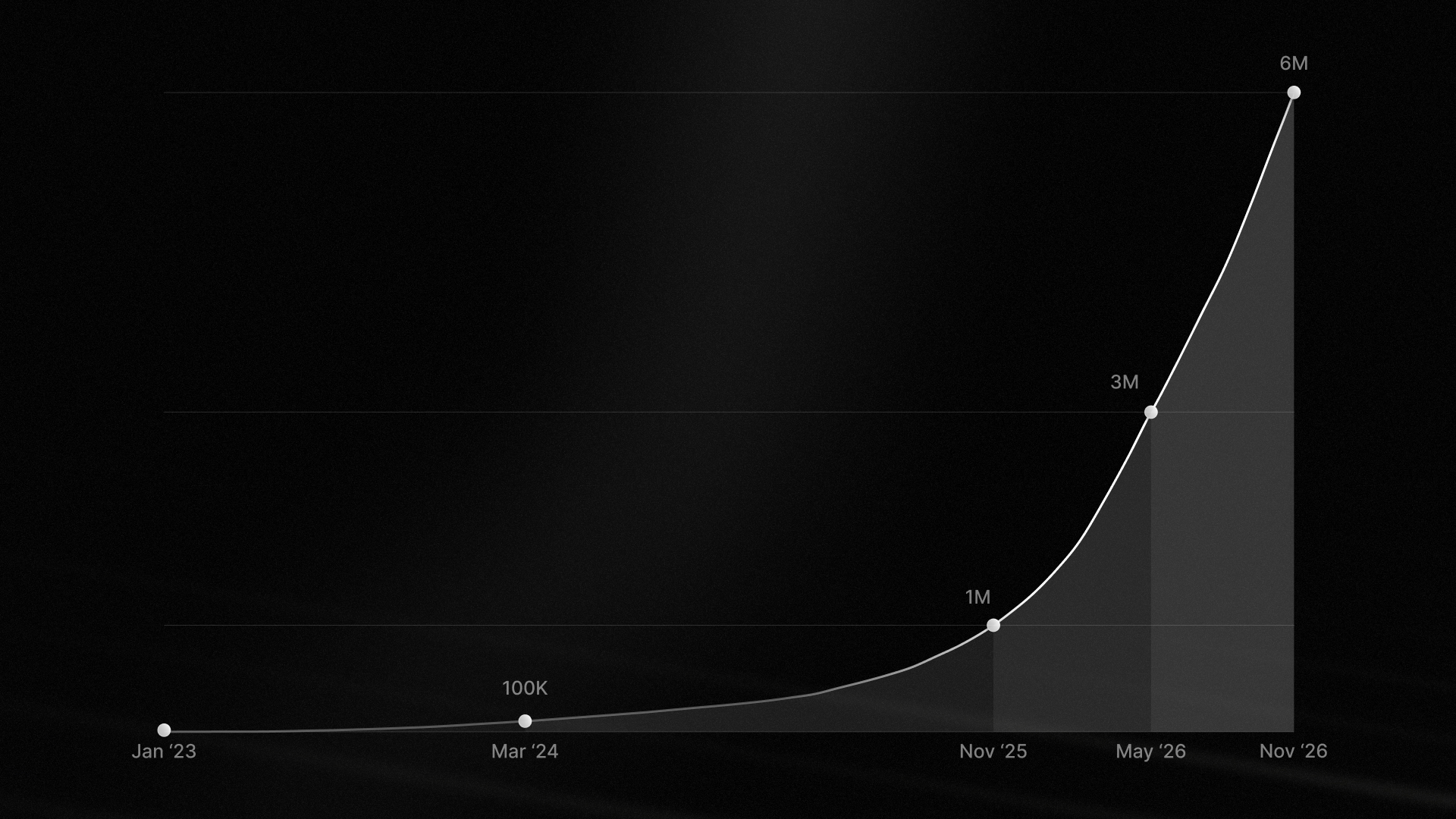
It took us three years to reach the first 3M. The next 3M took less than six months.
TL;DR
Since then, we went from:
- 3M → 6M users
- 43 → 57 team members
- 6.8M → 18M weekly downloads on npm
Something else changed too: more than half of our website traffic is no longer human.
That fact shapes almost everything below.
1. The email layer for a non-human internet
Every service on the internet already accepts an email address. That makes email the one identity an agent can use anywhere.
Agents already send email on behalf of companies. Now they're receiving, replying, and even emailing each other. The trend suggests that within months, most emails will be written, read, or answered by an agent.
That's why we built Inboxes: every agent gets its own address to send and receive.
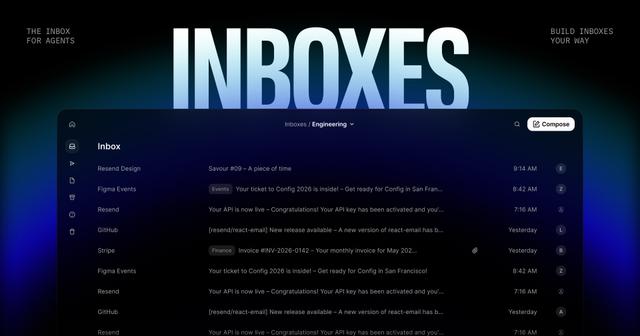
Announcing Inboxes
The inbox for agents. Create shared inboxes, connect your own agents, and build workflows around email.
resend.com/blog/announcing-inboxes
2. Loved by agents
The way people use Resend is changing. Developers spend less time in our dashboard and more time asking an agent to do the work.
Agents don't click buttons. So we're making everything headless: the API, MCP, CLI, and dashboard are interfaces to the same product, and we're working toward feature parity across them.
Coding agents also decide which provider to install, and they pick tools the same way developers do: by how easy they are to use.
We obsess over agent experience, and that's why agents pick Resend by default.

The Headless Dashboard Initiative
The path to make everything available through the MCP, CLI, or any SDK.
resend.com/blog/headless-dashboard-initiative
3. Scaling with our own metal
Resend started at the surface: a modern API and SDKs for every language. It was the right place to start.
But the surface can only be as good as what's underneath it. On a rented foundation, you don't control the things that matter most: how fast emails arrive, how retries work, or which IPs your customers send from.
So we built Forge, our own Mail Transfer Agent infrastructure. It sends from IP blocks we own and balance, through queues we control.
We're now moving all customer sending onto Forge. Every email that moves over arrives faster and gets better deliverability.
Time to delivered, legacy vs Forge
Real data [ last 7 days ]
All providers
1.4s
0.7s
89% faster
1.3s
0.7s
89% faster
Yahoo
1.8s
1.3s
38% faster
Outlook
3.1s
2.4s
32% faster
Apple
5.0s
5.1s
On par
4. Antifragile by design
Investor updates, password resets, and 2FA codes all travel through Resend.
Attackers now use frontier models to find vulnerabilities and write convincing phishing at scale. More code is written by agents, and more API keys end up in public repositories.
Anyone can vibe code an app in an afternoon. Nobody becomes trustworthy in an afternoon.
We're building Resend to be antifragile: the more pressure it's under, the stronger it gets. We've been SOC 2 Type II compliant since 2024 and we're preparing for HIPAA, but certifications are the floor. We treat security as product work, not compliance work:
- We're building granular permissions for API keys and OAuth sessions. You'll be able to give every system and agent access to exactly what it needs, and nothing more.
- We're giving admins more control over their team: who can join, how they sign in, and what they can touch. SSO was the first step, and there's more to come.
- We partnered with GitHub and TruffleHog on secret scanning. When your API key leaks, we revoke it automatically and let you know, often before you notice.

GitHub Secret Scanner
Exposed API keys are detected, revoked, and reported to your team automatically.
resend.com/changelog/github-secret-scanner
5. Self-driving email
Most email tools only see part of the journey. Email APIs see delivery but not conversions. Marketing tools see clicks but don't control delivery.
We see the whole path, from the API call to the inbox to the click.
That puts us in a unique position to build something new: email that gets better with every send.
- Transactional messages will reroute on their own when a mailbox provider pushes back, so they keep landing in the inbox.
- Broadcasts will learn the best time to reach each contact and which contacts have stopped engaging.
- Automations will learn which steps work, where people drop off, and how long to wait between emails.
You'll set the goal. Resend will handle the driving.
Conclusion
Doubling users so fast puts pressure on everything: our infra, our support, and our team.
And as we grow, we're not leaving behind what got us here: an obsession with craft.
When we started the company, every email sent through Resend was written by a human, for a human. That's no longer true, and we intend to be the email layer for both: the humans and the agents they work with.
We've never had more in the works than we do right now, and the next few months will show it. There's a lot left to build, so come build it with us.
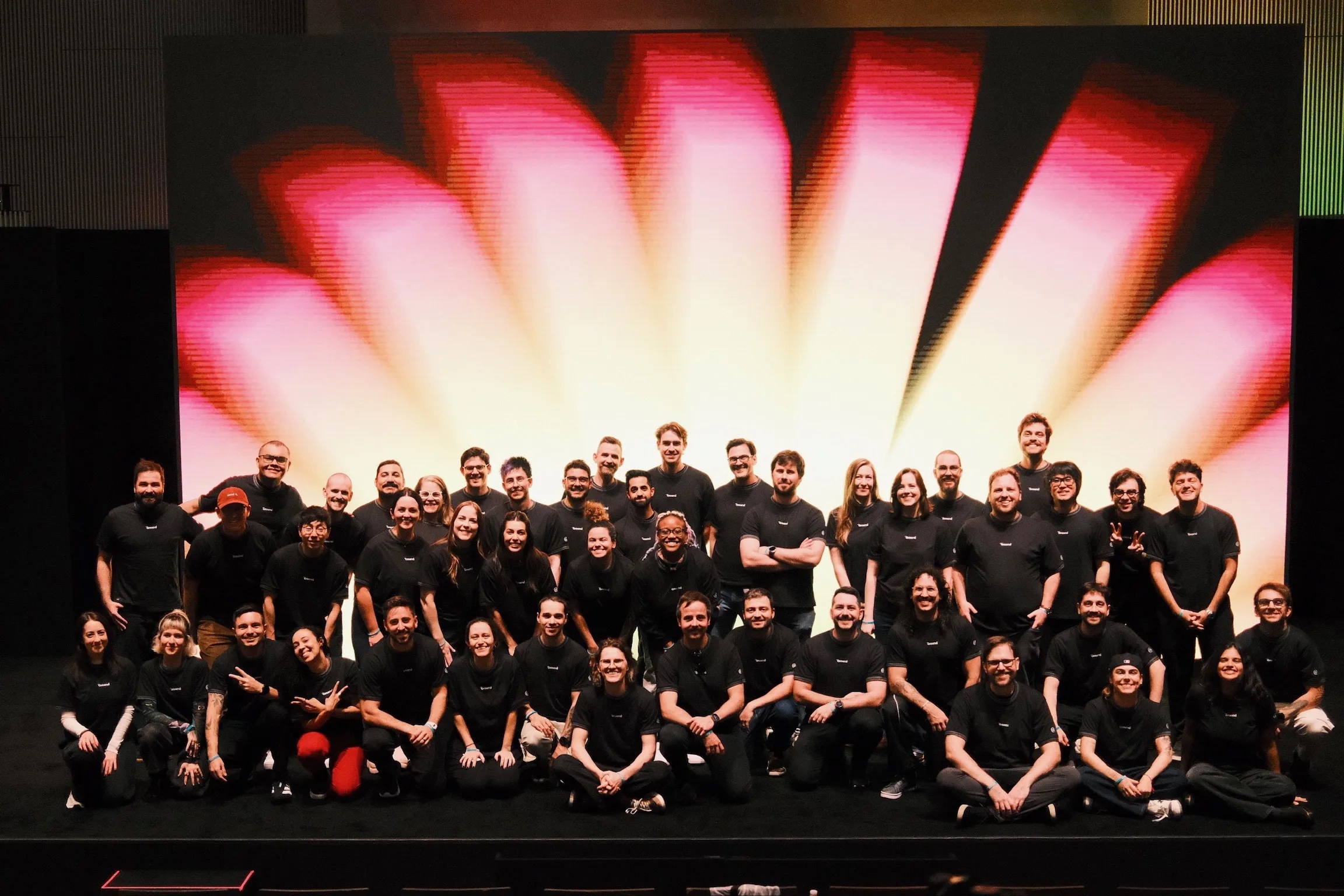
The team at Resend Forward in San Francisco